NEWS ALERT - We won a SILVER IPM award for Best use of Social Media, 2025! Read more🏆
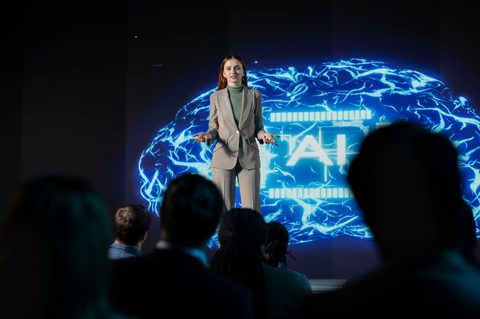
The rise of AI has undoubtedly changed the way creative teams work. Tasks that once took hours can now be completed in minutes, allowing agencies to move faster and explore more possibilities. But as AI becomes increasingly capable, one question continues to spark debate across the industry: What still makes creative work human?
The answer lies not in the tools we use, but in the thinking behind them. While AI can accelerate processes and assist with execution, it cannot replicate human experiences, emotions, or intuition. The ideas that truly resonate with people often come from understanding culture, recognising subtle emotions, and seeing the world through a uniquely human lens. As technology becomes more accessible, these qualities are becoming even more valuable, reminding us that creativity is about more than creation; it's about connection.
There's no denying that AI has become a valuable asset for agencies. From content generation to image creation and data analysis, it helps teams save time and improve efficiency.
Some of the most common ways agencies are using AI today include:
These tools help teams work smarter, but efficiency alone doesn't create great work. A faster process doesn't automatically lead to stronger ideas
A useful distinction is that AI can generate creative outputs, but it cannot take responsibility for deciding which ideas are strategically appropriate, culturally sensitive or aligned with a brand.
Creative work starts with understanding people. It involves identifying challenges, uncovering insights, and finding opportunities to communicate in meaningful ways. Before launching a campaign, creative teams spend time understanding what audiences care about, how they think, and what motivates them.
AI can generate ideas and recognise patterns, but it doesn't have lived experience or accountability. People still need to decide which ideas are strategically relevant, culturally appropriate, and aligned with a brand's voice. While AI can speed up the creative process, the responsibility for making the right creative decisions remains with humans.
This is reflected in Adobe's 2026 Creator Toolkit Report, where 93% of creators said AI helped them produce content faster. However, 57% reported that AI-generated outputs still required moderate or extensive editing, while 85% believed the final creative decision should remain with the creator.
Ultimately, creativity isn't just about producing more content. It's about making thoughtful decisions that connect ideas, emotions, and brand objectives in a way that feels authentic and meaningful.
The campaigns people remember are rarely the ones with the most advanced technology. They're the ones that make people feel something.
Whether it's humour, nostalgia, inspiration, excitement, or empathy, emotions play a major role in how audiences connect with brands. Understanding those emotions requires more than data. It requires human experience.
Creative professionals draw from observations, conversations, cultural shifts, and real-life experiences to craft messages that resonate. They understand subtle nuances, social contexts, and emotional triggers that are difficult to replicate through algorithms alone.
This emotional insight often becomes the difference between content that gets viewed and content that gets remembered.
Every brand has its own personality, values, voice, and goals. Successful creative work isn't just about producing content. It's about ensuring every piece of communication contributes to a larger story.
Strong brand thinking requires understanding what a brand stands for, how it should be perceived, and what makes it different from competitors. As highlighted by Trizone India, AI can streamline creative workflows and support branding efforts, but human insight remains essential for shaping authentic brand identities. While AI can generate ideas and identify patterns, defining a brand's purpose, vision, and long-term direction still requires human judgment.
The conversation around AI often focuses on replacement, but the reality is far more practical. Effective creative teams aren't replacing creativity with AI. They're using AI to strengthen it.
By automating repetitive tasks and accelerating research, AI gives creative teams more time to focus on higher-value thinking. Instead of spending hours gathering information or creating multiple drafts, teams can dedicate more energy to refining ideas, solving problems, and developing stronger strategies.
In this way, AI becomes a tool within the creative workflow. The real advantage comes from knowing when to rely on technology and when to rely on human judgment. While AI can generate possibilities, it still takes creative professionals to evaluate those possibilities, shape them into meaningful ideas, and ensure they align with a brand's goals. The most effective creative work happens when human expertise and AI capabilities work together.
As AI becomes a bigger part of the creative process, human oversight becomes even more important. While AI can accelerate workflows, people remain responsible for ensuring that creative work is accurate, ethical, and aligned with both the brand and its audience.
Human expertise is especially important when it comes to:
Technology can support these decisions, but accountability always remains with people. Great creative work isn't just about what can be created. It's about what should be created.
As AI continues to evolve, creative workflows will undoubtedly change. New tools will emerge, production processes will become faster, and agencies will find new ways to improve efficiency.
What won't change is the need for human perspective. Audiences don't build relationships with technology. They build relationships with stories, emotions, and experiences. They connect with brands that understand them and communicate with authenticity.
AI can help create content, but it cannot replace the human ability to understand people, interpret culture, and build meaningful connections. That is why the future of creativity isn't about choosing between AI and humans. It's about combining the strengths of both. The most effective creative work doesn't come from technology alone. It comes from pairing innovative tools with strategic thinking, emotional insight, and a deep understanding of people.
If you're looking to create content, campaigns, and brand experiences that blend the power of AI with the creativity of human thinking, connect with us today. Let's build work that not only captures attention but creates lasting impact.